
Honeysuckle Witches’ Broom Aphid: Signs, Damage, and Control Guide
Honeysuckle witches’ broom aphids are tiny pests that can cause significant damage to honeysuckle plants. These sap-feeding insects inject toxins into leaves, leading to distorted growth, leaf curling,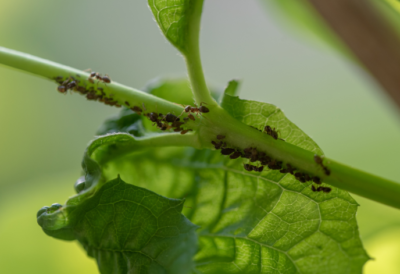 and the formation of broom-like shoots if not treated early.
There are dozens of species of aphids. The Honeysuck Witches’ Broom is just one type, and it grows only to around 0.08in long. It’s pale green to cream in color, making it very hard to see.
Lifecycle of the Honeysuckle Witches’ Broom Aphid
This type of aphid will go through generations throughout the growing season. They eventually develop to a winged creature that can move from plant to plant.
They will overwinter as eggs on the tip of the honeysuckle branches. Then in the middle of spring, the eggs hatch and immediately start feeding on the leaves. The summer is spent eating and mating, and then in the winter, eggs are laid to start the cycle again.
The Damage Honeysuckle Witches’ Broom Aphids Cause
These types of aphids are toxic to the plants they feed on. They place toxins into the leaves while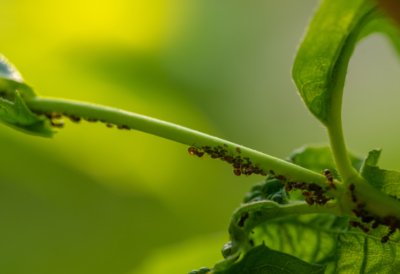 sucking on the sap, leading to discoloration and distortion in the leaves. The leaves start to fold over, and the newer leaves don’t have a chance to form properly.
The aphids get their name from the way the new shoots form. They look like witches’ brooms. Eventually, the new buds can’t flourish, and they start to break as they grow.
How to Handle These Types of Aphids
The Honeysuckle Witches’ Broom Aphid need to be handled quickly and with care. The best time is in early spring, just before the eggs hatch. You can cut off the witches’ brooms that have formed, as this is where the eggs will have been laid. Prune the plants to help prevent the growth of the eggs.
Some of the winged creatures will move onto other plants. You’ll need to use insecticide on the infested plants regularly, with application in early June. Repeat every three to five weeks as you need to. You may find that it takes a couple of treatments each season to get the pest problem under control.
Honeysuckle witches’ broom aphids can be a problem in Colorado, especially during spring and summer when plants are actively growing.
Frequently Asked Questions
What is a honeysuckle witches’ broom aphid?
It is a small, sap-feeding insect that causes distorted growth and broom-like clusters on honeysuckle plants.
When are honeysuckle aphids most active?
They are most active in spring and summer, beginning when eggs hatch in mid-spring.
What damage do witches’ broom aphids cause?
They cause leaf curling, discoloration, and abnormal shoot growth known as witches’ broom.
How do you control honeysuckle witches’ broom aphids?
Control includes pruning affected growth early and applying insecticides during active periods to reduce populations.
Can witches’ broom damage be reversed?
No, once formed, the damage cannot be reversed, but future growth can be protected with early treatment.

Comments are closed.